
Blog · Quality
How to read an aluminum mill test report (MTR) for sheet, coil and circles

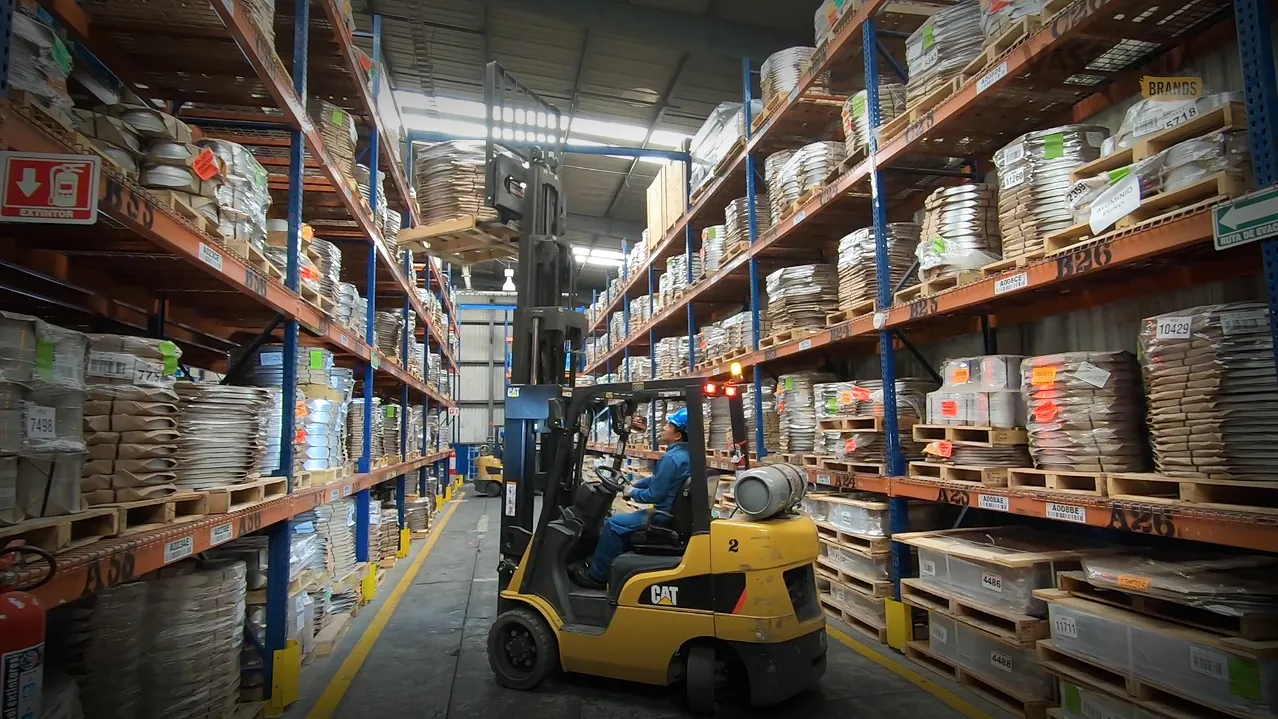
An aluminum mill test report (MTR), also called a mill test certificate or certificate of analysis, is the document for one specific lot: lot and cast number, alloy and temper, dimensions, measured chemical composition and mechanical properties (tensile strength, yield strength and elongation), product specification, date and signature. It is not the data sheet, which describes the product in general, nor the ISO 9001 certificate, which certifies the management system, not the product. EN 10204:2004 defines four types: 2.1, with no test results; 2.2, with results from products of the same specification and process, not necessarily the lot shipped; 3.1, with results for the lot validated by the manufacturer's inspection department; and 3.2, also signed by the purchaser's inspector or the one named by regulations. Example: in 3003 aluminum, manganese must fall between 1.0 and 1.5%. Almexa ships every lot with a mill test report covering chemistry and mechanical properties, plus lot origin documentation. Sources: UNI EN 10204; The Aluminum Association, 2018; IAF and ISO, 2018; almexa.com.mx, 2026.
A coil arrives at your dock with a tag and, in the shipment or by email, a sheet full of numbers. That sheet is the lot's mill test report: the written evidence that the aluminum you received is the aluminum you ordered. This guide explains what it contains, how to read it, how to check it when you receive sheet, coil or circles, and what to ask your supplier for.
What is an aluminum mill test report?
It is the document the producer issues for a specific lot: the alloy, temper and dimensions shipped, and the chemical composition and mechanical properties measured on that lot against a product specification. It is also called a mill test certificate or certificate of analysis; in Mexico, certificado de análisis or certificado de molino.
It often gets mixed up with two other papers:
| Document | What it says | Which material it covers |
|---|---|---|
| Mill test report | Measured chemistry, mechanical properties, temper and dimensions | Your lot, by its number |
| Data sheet | Alloys, tempers, size ranges and reference values | The product in general |
| ISO 9001 certificate | That the plant's quality management system meets the standard | None: it certifies the system |
Certifying a management system does not mean the product is certified to a standard (IAF and ISO, 2018). To accept a lot, what counts is the mill test report with its lot number; the data sheet and ISO 9001 help you approve a supplier, not receive material.
EN 10204 certificate types: 2.1, 2.2, 3.1 and 3.2
European standard EN 10204:2004 classifies inspection documents for metallic products such as sheet, plate or bar, and it is still in force (EVS, checked October 26, 2026). What separates the types is where the results come from: in non-specific inspection, from products of the same specification and process, not necessarily the ones you receive; in specific inspection, from the products to be shipped to you or from test units of that lot (UNI EN 10204:2005, public preview).
| Type | What it includes | Who validates it |
|---|---|---|
| 2.1, declaration of compliance | States the product meets the order, with no test results | The manufacturer |
| 2.2, test report | Results of non-specific inspection | The manufacturer |
| 3.1, inspection certificate | Results of specific inspection | The manufacturer's inspection department, independent of production |
| 3.2, inspection certificate | Same as 3.1, also prepared by a third party | The manufacturer and the purchaser's inspector or the one named by regulations |
Source: UNI EN 10204:2005, public preview (2.1, 2.2 and definitions); Van Leeuwen (3.1 and 3.2).
For a 3.2, an outside inspector visits the plant, witnesses the tests and signs with the manufacturer; it is used mostly for pressure equipment and oil and gas (LRQA). "3.1.B" is the 1991 edition's name, replaced by 3.1 (UNI, foreword). EN 10204 does not set tests or limits: it works alongside the product specification. The document type is agreed in the order: if your customer requires a 3.1 or a 3.2, write it into your request for quote.
How to read a mill test report, field by field
Lot, cast number and dimensions
The lot number ties the report to the tag on the coil, the sheet skid or the circle box; the cast number ties it to the slab the metal came from, which is why it also supports origin documentation. Without those numbers the report cannot be linked to your material. Also compare thickness, width, diameter or length and weight with your purchase order: a size error shows up in seconds.
Alloy and temper
It should state the exact alloy and temper, for example 3003-H14, not "3000 series". European reports may say EN AW-3003 and some US reports A93003, the Unified Numbering System: those prefixes are equivalent to registered 3003 and do not change its composition (The Aluminum Association, Teal Sheets, note 17). What each temper means is in our guide to aluminum temper designations.
Chemical composition against the limits
Each element is compared with the alloy's registered limit, following the notes in the Aluminum Association's Teal Sheets; European EN 573-3:2026 states identical limits (SFS record):
- A single value is a maximum unless shown as a range or a minimum (note 1).
- The measured value is rounded to the last decimal place of the limit: with a 0.6% silicon limit, 0.64% reads as 0.6 and conforms; 0.66% reads as 0.7 and does not (note 2).
- "Others" are elements with no limit of their own; the producer is not required to analyze them, but if any analysis finds one above the limit, the material is nonconforming (note 13).
Example with 3003. The right-hand column is illustrative, made up for this guide; it is not a real report from Almexa or any other mill:
| Element | 3003 limit (%) | Illustrative example (%) |
|---|---|---|
| Silicon | 0.6 max. | 0.21 |
| Iron | 0.7 max. | 0.55 |
| Copper | 0.05 to 0.20 | 0.12 |
| Manganese | 1.0 to 1.5 | 1.18 |
| Zinc | 0.10 max. | 0.03 |
| Others, each | 0.05 max. | 0.02 |
| Others, total | 0.15 max. | 0.06 |
| Aluminum | Remainder | Remainder |
Source of the limits: The Aluminum Association, Teal Sheets, August 2018. In the example everything conforms. Manganese at 1.0 to 1.5% is what sets 3003 apart from 1100, whose silicon plus iron limit is 0.95% for the sum, with 99.00% aluminum minimum (same source). More in 3003 aluminum.
Mechanical properties
Tensile strength, yield strength and elongation come from a tension test; in the United States, under ASTM B557, which ASTM itself considers satisfactory for acceptance testing of commercial shipments. They depend on temper: 3003-O and 3003-H14 can have the same composition and very different properties, because cold work raises strength and lowers elongation. Limits are set by alloy, temper and thickness in the tables of ASTM B209 or EN 485-2, which are sold: ask which edition the report is certified to and compare each value with its row.
A report that says "conforms" without measured values lets you compare nothing: ask for the numbers.
Specification, signature and date
It should name the specification and its edition, for example ASTM B209/B209M-21a, the active edition of the US standard for sheet and plate (ASTM, checked October 26, 2026), and show the name of the plant that made the material, the date and the signature of whoever validates it. B209 makes the producer responsible for all inspection and test requirements unless the contract says otherwise. If you buy from a distributor, ask for the original mill's report.
How to check the lot at receiving
- Match the lot number on the tag with the one on the report: if they differ, it is not your report.
- Compare alloy, temper and dimensions with your purchase order.
- Check each value against the specification limit, with the rounding above.
- Measure thickness with a micrometer at several points against the agreed tolerance, as explained in how to tell if aluminum is good quality.
- If you doubt the temper, bend a sample: ASTM B209 requires sheet to bend cold around a pin without cracking, at an angle set by alloy, temper and thickness.
- If you have a spectrometer, confirm the alloy on an area that will become scrap: spark units are the most accurate but leave a burn mark (SME, November 2018).
If a field is missing or something does not match, set the material aside unprocessed, notify the supplier in writing with photos of the tag and the report, and ask for a corrected report or a retest: once slit or drawn, a lot is harder to claim.
Country of smelt and cast for US imports
Since April 10, 2023, US Customs and Border Protection (CBP) has required importers to report, on every entry line of aluminum and aluminum derivatives, the primary country of smelt (and the secondary one, if there is more than one) and the country of cast (CSMS 55424218), and it kept the requirement for the April 2026 rates (CSMS 68253075). Smelt is where new aluminum was produced from alumina; cast is where the metal was last liquefied and cast.
The mill test report comes in through the cast number, which ties your coil to the slab. For Almexa the country of cast is Mexico, because the metal is cast and rolled in Cuautitlán Izcalli; the country of smelt is backed by the ingot producer's certificates and declared by the direct importer in Mexico's Automatic Aluminum Import Notice (AAA). More in how to document the country of smelt and cast, in our Section 232 aluminum tariffs guide and in USMCA aluminum coil and sheet from Mexico.
What to put in writing on your purchase order
- A mill test report per lot with measured values, with the shipment or before it.
- The product specification and its edition, and the EN 10204 type if your customer requires one.
- Exact alloy and temper, dimensions and tolerances.
- The same lot and cast number on the tag and on the report.
- Caps on trace elements such as lead or cadmium, if your standard or customer sets them: the Aluminum Association advises including requirements that restrict composition in the sales agreement (Teal Sheets, foreword). For cookware, see aluminum for food contact.
- If you buy from a distributor, the mill's name and its original report.
- If the material goes to the United States, the lot's origin documentation.
How Almexa provides its mill test report
Almexa casts and rolls aluminum at its plant in Cuautitlán Izcalli, State of Mexico. Every lot of coil, sheet, circles, blanks, strip or hot band ships with a mill test report covering chemical analysis and mechanical properties, and with the lot's origin documentation. The plant operates under ISO 9001:2015 certified by Intertek (CERT-0138198, valid until February 4, 2027), which you can download from the certifications page. If your customer requires an EN 10204 document type or the country of smelt, say so when you request a quote.
Send your specification for a quote from the mill: alloy, temper, dimensions, tons and the documents you need with each lot.
Sources
All accessed October 26, 2026.
- UNI, public preview of UNI EN 10204:2005 (text of EN 10204:2004): definitions, types 2.1 and 2.2 and changes from 1991.
- EVS, EVS-EN 10204:2004 record: status.
- Van Leeuwen, "Inspection documents to EN 10204": types 3.1 and 3.2.
- LRQA, "Understanding EN 10204: 2004, Type 3.2 Certification": 3.2 certification.
- IAF and ISO, "Expected outcomes for accredited certification to ISO management system standards," 2018: scope of management system certification.
- The Aluminum Association, Teal Sheets, August 2018: 3003 and 1100 limits, foreword and notes.
- SFS, SFS-EN 573-3:2026 record: current edition.
- EVS, EVS-EN 485-2:2016+A1:2018 record: mechanical properties.
- ASTM, B209/B209M-21a: active edition, bend test and producer responsibility.
- ASTM, B557-15 (2023): tension testing.
- SME, "Testing the Metal," November 27, 2018: spark spectrometers.
- CBP, CSMS 55424218, March 9, 2023 and CSMS 68253075, April 3, 2026: countries of smelt and cast.
Frequently asked questions
What is an aluminum mill test report?
It is the document for one lot of aluminum, issued by the plant that made it: lot and cast number, alloy and temper, dimensions, measured chemical composition and mechanical properties, the product specification, the date and the signature. It is also called a mill test certificate or MTR. It is not the data sheet, which describes the product in general.
What is an EN 10204 3.1 certificate?
It is the type 3.1 inspection certificate of European standard EN 10204:2004: the manufacturer states that the product meets the order and supplies test results from the products shipped or from test units of that lot, validated by its inspection representative, independent of the production department. If your customer requires it, put it on the purchase order.
What is the difference between a 3.1 and a 3.2 certificate?
Both carry results of specific inspection of the lot. A 3.1 is validated by the manufacturer's inspection department; a 3.2 is prepared by the manufacturer together with the purchaser's inspector or the inspector named by regulations, who visits the plant and witnesses the tests. That is why a 3.2 is arranged in advance.
Is a data sheet the same as a mill test report?
No. A data sheet describes the alloys, tempers and size ranges of a product in general; a mill test report shows what was measured on your lot, by its number. Material is received against the mill test report; the data sheet is for choosing and comparing.
Does an ISO 9001 certificate certify the aluminum I buy?
No. ISO 9001 certifies the plant's quality management system. According to IAF and ISO (2018), that certification does not mean the product is certified to a standard or specification. Your lot's conformity is backed by its mill test report.
Does a mill test report show the country of smelt and cast?
The mill test report ties your material to its lot and cast number; the primary country of smelt is documented separately, through the ingot producer's certificates. Almexa casts and rolls in Mexico, so the country of cast of its products is Mexico, and it provides origin documentation for every lot.
Does Almexa ship a mill test report with every lot?
Yes. Every lot of coil, sheet, circles, blanks, strip or hot band ships with a mill test report covering chemical analysis and mechanical properties, and with the lot's origin documentation. Its ISO 9001:2015 certificate from Intertek can be downloaded from the certifications page at almexa.com.mx.

Leads Almexa Aluminio, Mexico's aluminum rolling mill. Writes about alloys, process, pricing and supply for industrial buyers in North America. LinkedIn