
Blog · Alloys
5000 series aluminum: 5005 vs 5052 vs 5754, how they differ and which to order

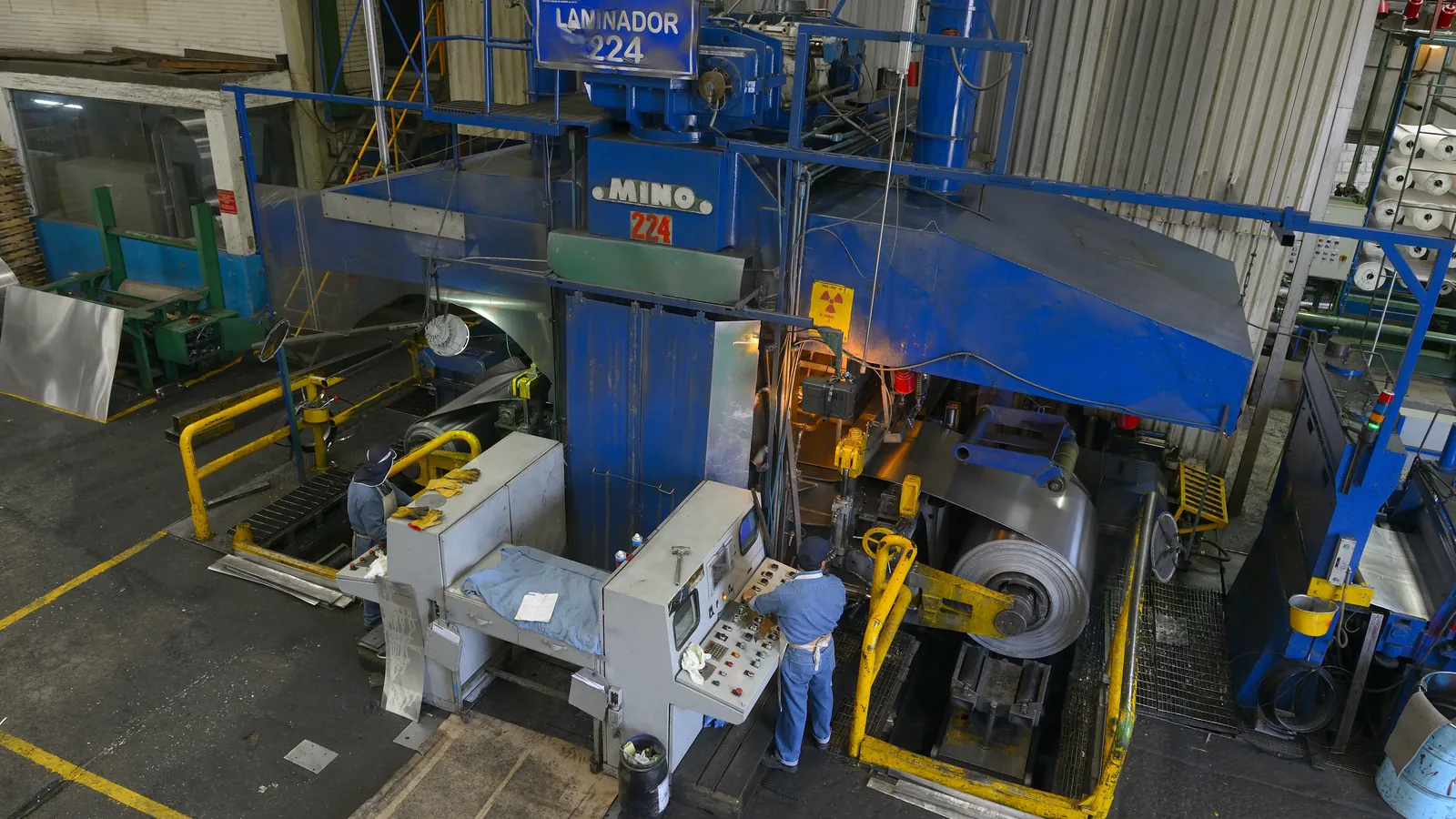
The three 5000 series alloys Almexa makes differ in magnesium: 5005 has 0.50 to 1.1%, 5052 has 2.2 to 2.8% and 5754 has 2.6 to 3.6% (EN 573-3). More magnesium means more strength: using the EN 485-2 values published by UK stockists, 5005-H34 has a tensile strength of 145 to 185 MPa (21 to 27 ksi), 5052-H32 210 to 260 MPa (30 to 38 ksi) and 5754-H22 220 to 270 MPa (32 to 39 ksi). 5005 is the architectural alloy for anodized sheet; 5052 is for tanks, enclosures, marine parts and general stamping; 5754 is what drawings to European standards call for, as in automotive. Almexa makes all three in coil 0.0197 to 0.148 in (0.50 to 3.76 mm) thick and up to 36 in (914 mm) wide, in O, H32, H34 and H36 tempers. Sources: Aalco and Righton Blackburns (EN 573-3 and EN 485-2), accessed October 28, 2026; Almexa data sheet, October 2026.
The 5000 series is the aluminum magnesium alloy family. These alloys are not heat treatable: their strength comes from magnesium and cold work, which the temper designates. Almexa makes three: 5005, 5052 and 5754. The 5052 aluminum page has its full chemistry, sizes and forms; here the three are compared so you can choose.
Chemistry: magnesium is what changes
| Alloy | Magnesium (%) | Other limits that set it apart (%) |
|---|---|---|
| 5005 | 0.50 to 1.1 | Manganese 0.20 max., chromium 0.10 max. |
| 5052 | 2.2 to 2.8 | Chromium 0.15 to 0.35, manganese 0.10 max. |
| 5754 | 2.6 to 3.6 | Manganese 0.50 max., chromium 0.30 max., manganese plus chromium 0.10 to 0.60 |
Source: EN 573-3, per Aalco (5005 and 5052) and Righton Blackburns (5754) data sheets; for 5052 it matches the Aluminum Association (2018). In Europe 5754 is also called AlMg3, and 5052, AlMg2.5. How to read the four digits is in what aluminum alloy numbers mean.
Strength: alloy and temper together
| Alloy and temper | Tensile strength, MPa (ksi) | Minimum yield, MPa (ksi) |
|---|---|---|
| 5005-H34 | 145 to 185 (21.0 to 26.8) | 110 (16.0) |
| 5052-H32 | 210 to 260 (30.5 to 37.7) | 130 (18.9) |
| 5754-H22 | 220 to 270 (31.9 to 39.2) | 130 (18.9) |
Source: EN 485-2 values published by Aalco (5005-H34, sheet 0.2 to 12.5 mm; 5052-H32, 0.2 to 6 mm) and Righton Blackburns (5754-H22, 0.2 to 40 mm, data sheet of January 11, 2024); ksi converted by us. These are the tempers on those data sheets; always compare alloys in the same temper.
At a similar temper, 5754 is slightly stronger than 5052, and 5052 is much stronger than 5005.
Almexa makes the 5000 series in O, H32, H34 and H36. H32 is strain hardened and then stabilized by a low temperature treatment, to quarter hard (Aalco); H22 is strain hardened and partially annealed. The full difference between H1X, H2X and H3X is in aluminum temper designations. ASTM B209, the US sheet standard, sets its own minimums in ksi, which may differ from EN 485-2: if your customer cites one, compare against that one. Your lot's actual values are on its mill test report.
Forming
In the 5000 series the temper matters more than the alloy: O temper in any of the three forms far better than H34. Aalco describes 5052 as having good cold formability, and Total Materia notes that the aluminum magnesium alloys used for car body parts have very good formability and a relatively low yield stress. For deep drawing, the comparison with the 1000 and 3000 series is in which aluminum alloy for deep drawing.
Welding
Aalco rates the weldability of 5005 and 5052 as very good; for 5052 it details arc very good, resistance very good, gas good, brazing acceptable and soldering not recommended. Total Materia notes that aluminum magnesium alloys are readily welded by a variety of techniques. Filler metal is chosen with your welding procedure.
Corrosion and temperature
- 5005: very good resistance to atmospheric corrosion (Aalco).
- 5052: very good resistance to seawater and to marine and industrial atmospheres (Aalco).
- 5754: excellent corrosion resistance, especially to seawater (Righton Blackburns).
One caution for 5754: above about 3% magnesium a phase can precipitate that, in heavily cold-worked metal held at high temperature for long periods, sensitizes the microstructure (Total Materia). If your part will run hot, say so on the RFQ.
Anodizing
Aalco describes 5005 as highly suitable for decorative anodizing, with a caveat: streaks can occur, and for a critical finish you should order special anodizing quality. That is why 5005 is the alloy for anodized facades, panels and signs. If you plan to anodize 5052 or 5754, test a sample before the order, and in any case state on the RFQ that the sheet will be anodized.
Which one to order
| If your part is | Order | Why |
|---|---|---|
| Facade, panel, sign or anodized part | 5005 | Decorative anodizing and good atmospheric resistance |
| Tank, enclosure, container, marine part or general stamping | 5052 | More strength and very good seawater resistance |
| Automotive part, or a drawing that says EN AW-5754 or AlMg3 | 5754 | It is the alloy on the drawing; the strongest of the three |
| A part that does not need 5000 series strength | 3003 or 3105 | Easier to form, and Almexa rolls them up to 48 in wide |
In automotive, Speira, a European sheet producer, bases its corrosion resistant solutions for body inner parts, including unpainted ones, on 5xxx alloys such as 5754. For automotive stamping, Almexa offers 5052 and 5754. More on the other families in aluminum alloys.
Width and supply
Almexa rolls the 5000 series up to 36 in (914 mm) wide. If your drawing says 48 in out of habit, check how wide your part really is: see aluminum coil widths. Price for any of the three is built from LME, premium and the mill's fabrication charge, explained in how aluminum price is calculated.
How Almexa works
Almexa casts and rolls 5005, 5052 and 5754 in Cuautitlán Izcalli, State of Mexico: coil 0.0197 to 0.148 in (0.50 to 3.76 mm) thick and 6.30 to 36 in (160 to 914 mm) wide; sheet 0.0197 to 0.148 in thick and 11.97 to 36 in (304 to 914.4 mm) wide; circles 0.0220 to 0.148 in (0.56 to 3.76 mm) thick and up to 36 in (914.4 mm) in diameter; and strip and blanks within the coil range. Tempers O, H32, H34 and H36, tolerances to Aluminum Association standards and a mill test report with chemistry and mechanical properties on every lot. See aluminum coil and aluminum sheet and plate.
Send your specification for a quote from the mill: alloy, temper, gauge, width, tons and what the part is.
Sources
All accessed October 28, 2026.
- Aalco, "Aluminium Alloy, Commercial Alloy 5005 H34 Sheet": chemistry per EN 573-3:2009, properties per EN 485-2:2008, anodizing, welding and corrosion.
- Aalco, "Aluminium Alloy, Commercial Alloy 5052 H32 Sheet and Treadplate": chemistry, properties, H32 definition, welding, formability and corrosion.
- Righton Blackburns, "Aluminium 5754 H22 Sheet & Plate," updated January 11, 2024: chemistry per EN 573-3, properties per EN 485-2 and corrosion resistance.
- Total Materia, "AlMg Alloys: Part One," April 2014: welding, formability and magnesium above 3%.
- Speira, "Aluminium inner panels for automotive": 5754 in body inner parts.
- The Aluminum Association, International Alloy Designations and Chemical Composition Limits, August 2018 revision: 5052 chemistry.
- Almexa data sheet, October 2026: alloys, tempers, sizes and automotive uses.
Frequently asked questions
What is the difference between 5005, 5052 and 5754 aluminum?
Magnesium: 0.50 to 1.1% in 5005, 2.2 to 2.8% in 5052 and 2.6 to 3.6% in 5754 (EN 573-3). More magnesium means more strength. 5005 is used for anodized architectural sheet, 5052 for tanks, enclosures, marine parts and stamping, and 5754 where the drawing calls for the European standard, as in automotive.
What does 5052-H32 mean?
It is 5052 aluminum in H32 temper: strain hardened and stabilized by a low temperature treatment, to quarter hard. Per EN 485-2 as published by Aalco, it has a tensile strength of 210 to 260 MPa (30.5 to 37.7 ksi) and a minimum yield of 130 MPa (18.9 ksi) in 0.2 to 6 mm sheet.
Which is stronger, 5052 or 5754?
5754, slightly: using the EN 485-2 values published by UK stockists, 5754-H22 has a tensile strength of 220 to 270 MPa and 5052-H32 210 to 260 MPa, with the same 130 MPa minimum yield.
Which 5000 series alloy is best for anodizing?
5005, which Aalco describes as highly suitable for decorative anodizing. Streaks can occur: for a critical finish, order special anodizing quality and state on the RFQ that the sheet will be anodized.
Can 5052 aluminum be welded?
Yes. Aalco rates its weldability as very good: arc and resistance welding very good, gas welding good, brazing acceptable and soldering not recommended.
What sizes and tempers does Almexa make in the 5000 series?
In 5005, 5052 and 5754: coil 0.0197 to 0.148 in thick and 6.30 to 36 in wide, sheet up to 36 in wide, circles up to 36 in in diameter, and strip and blanks within the coil range, in O, H32, H34 and H36, with a mill test report per lot.

Leads Almexa Aluminio, Mexico's aluminum rolling mill. Writes about alloys, process, pricing and supply for industrial buyers in North America. LinkedIn